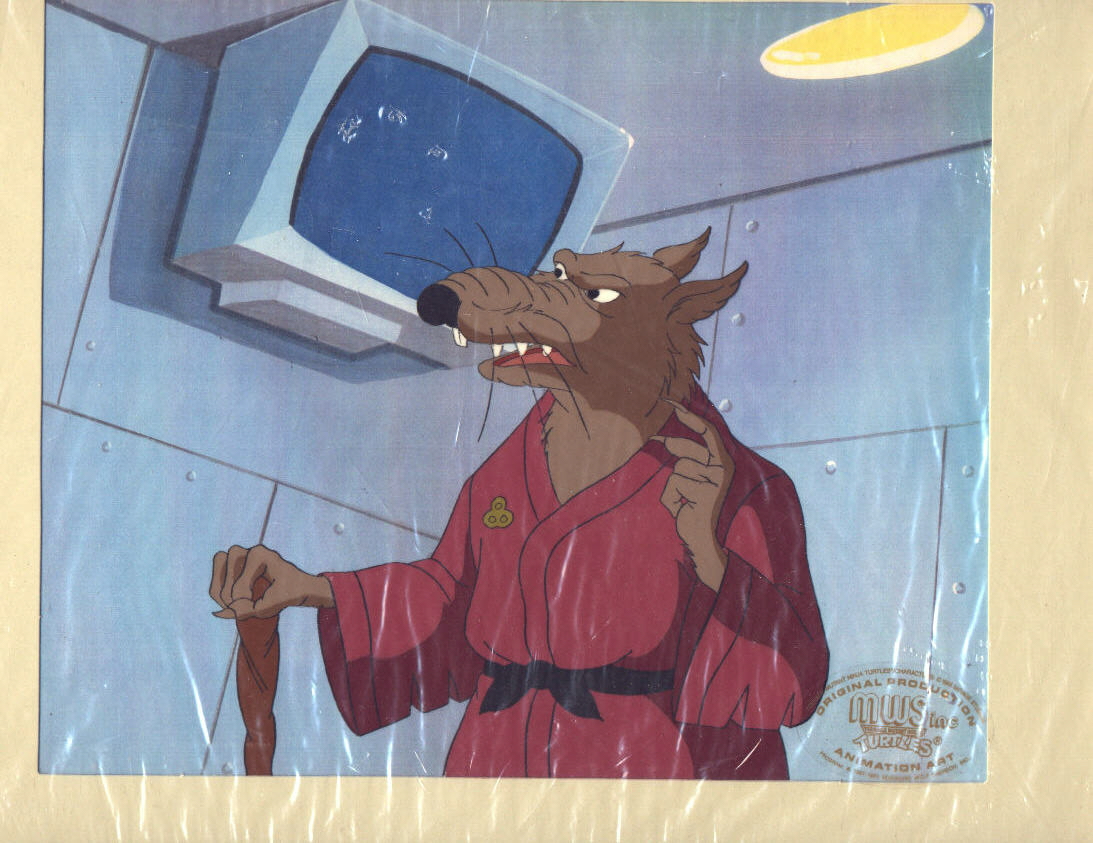
This book by Kate DiCamillo is ostensibly an adventure story about a mouse, but Despereaux is only in about a third of the book. The story is divided into quarters, with the first three quarters each told by a different character. Despereaux, one of these characters, is a misfit mouse who falls in love with a human princess, which seems unlikely. But due to his contact with humans, he is banished by the mouse community to the rat-infested dungeon, and conflict ensues.
The Tale of D. won the Newberry Award in 2003, and I think it is deserved. The book is pretty delightful throughout, and each of the leading characters' stories are interesting. I highly recommend it.
In 2008, the story was sort of made into a movie. I say "sort of" because (although I haven't actually seen the movie), the trailer below makes the film look appear to have only a couple of similarities with the book:
1) It has mice.
2) One of them is named Despereaux.
After reading this book, it occurs to me that there are a ton of books that revolve around mice.
1) The T of Despereaux (obviously)
2) Mrs. Frisby and the Rats of NIMH (and the sequels, all excellent)
3) Poppy (decent)
4) Stuart Little
5) Ralph S. Mouse
6) The Rescuers
7) The Wind in the Willows (one of my personal favorite books (actually, this might just be rats, moles, and the like, but that's close enough))
8) The Redwall series (pretty good, for the most part)
9) Of Mice and Men (?)
10) Basil of Baker Street (also a movie which I remember enjoying)
And if we include TV, we can add Biker Mice from Mars, Chip and Dale, Mickey Mouse, Mighty Mouse, Speedy Gonzalez, Teenage Mutant Ninja Turtles (almost!), and the list goes on.
Are these rodents disproportionately featured, or am I just thinking selectively? If this really is a large quantity of mouse fiction, what is the reason for all of it?
Friday, February 19, 2010

Thursday, February 18, 2010
Tigers
China has got it all. After visiting their awesome ice festivals, I would like to attend a New Year's celebration there. These photos (click them for a larger version) are from their New Year's Day on Sunday.

 This is the Year of the Tiger, which arrives every twelve years. The motto for the Y of the T is "I win," and people born during this year are supposedly unpredictable, daring, and restless.


 This is the Year of the Tiger, which arrives every twelve years. The motto for the Y of the T is "I win," and people born during this year are supposedly unpredictable, daring, and restless.

Wednesday, February 17, 2010
Social Security
Paul Ryan, a Congressman from Wisconsin, has been making a few waves with his recently released "Roadmap for America," which presents his suggestions for making our government solvent in the long term. One segment of this roadmap involves Social Security: Ryan proposes to provide the option for investing in personal savings accounts, and also phases out some benefits for people under age 55.
Some people are not too pleased with this idea:
Some people are not too pleased with this idea:
His Roadmap would achieve a goal that conservative opponents of Social Security have cherished for decades: killing the program by undermining its broad base of popular support. It would sap Social Security's resources, increase its complexity and hammer a wedge between the currently retired or near-retired (who would be guaranteed their current statutory benefits) and younger workers and the future workforce (who would be increasingly on their own). The term for this is "divide and conquer."The author doesn't mention that Social Security is incredibly unsustainable as it is. In fact, he says
Its "fragile condition"? Social Security runs an annual surplus and has done so since 1983; no other government program can make that claim.In 2009, Social Security spending totaled nearly $700 billion, about 20% of all federal spending. The Congressional Budget Office states that
By the way, even when the program starts paying out more in benefits than it collects in payroll tax, that's not a "crisis."
Even if other major categories of federal spending remained fixed as a share of GDP, the growth of those programs would push total federal spending well above the level that it has been throughout much of the post-World War II period. Left unchecked, such spending could cause major deficits to emerge, propelling the government's debt and interest expenditures to unprecedented levels.The number of people in America between the ages of 65 and 75 will roughly double over the next twenty years, but the number of people paying SS taxes will not increase at the same rate. One doesn't need to be an actuary to recognize that something is amiss here. If nothing substantial is done to deal with this problem, eventually SS will have to be cut dramatically, leaving many people in a lurch come retirement. This is evidenced by the article's author (although his point is different than mine):
Social Security's value to the average American isn't "shrinking" -- it's expanding. In 1962, it accounted for 30% of the income of Americans aged 65 and older; in 2007 that figure was 36%. (These numbers come from the Social Security Administration.) Given what's happened to most families' financial assets since 2007, the percentage probably is even higher today.This is not a good thing. As people become more and more dependent on this government program, they will prepare less themselves. And when the day of reckoning arrives, they probably won't be very happy.
Tuesday, February 16, 2010
Budapest!
This is David here, guest blogging about my vacation to Budapest
My
The guy finally showed up, though, and brought us to a private apartment around the corner, which was pretty upscale living! The apartment even had automatic checkout, he said. All we had to do when we left was to lock the door from the outside, and then chuck our keys in through a window.

Speaking of hiking, we strolled through about a dozen different parks as well.

My favorite part of this city was how slow-paced it was. Because it doesn't have dozens of museums and the like, we didn't feel pressured to dash around and see everything. Therefore, we were able to spend quite a bit of time hanging out at outdoor cafes, sampling the local potent potables, and watching the people stroll by. It was very relaxing and enjoyable, and is not something I have experienced as well in other European cities.

The most notable attraction of 
This is being cross-posted on my blog, Only Palaver.
Monday, February 15, 2010
Trade Deficits
Update - fixed the readability of my quotes
Pretty regularly, folks lament that the U.S. is hemorrhaging jobs, as evidenced by the ballooning trade deficit. For example, this is from a Chicago Tribune article last week:
In scenario 2, Don lives in the same town, but everyone buys goods from Target or Wal-Mart, which imports a lot of items from California. Because many of these things are cheaper, residents of this town can now afford to go out to dinner once a week. Soon, more restaurants are opening, financed by loans from the Bank of California. The manufacturers in the neighboring city may go out of business, or they may improve their products or design completely new products. Life may be less comfortable for the manufactures for a while, but for the Oregonians, things are really good.
Would anybody get upset that Oregon imports a lot of goods from California? Replace "California" in the preceding paragraph with "Japan" and the conclusions are exactly the same.
Pretty regularly, folks lament that the U.S. is hemorrhaging jobs, as evidenced by the ballooning trade deficit. For example, this is from a Chicago Tribune article last week:
The U.S. trade deficit took an unexpectedly large turn for the worse in December, loading more foreign debt onto Americans...
While trade balance reports attract relatively little public attention -- and the country has run deficits every year since 1976 -- the long-term effect of buying more goods from other countries than those countries buy from the United States is having a significant effect on Main Street. And for most Americans, the effect is not positive.
The negative effect the article goes on to describe involves Americans buying cheap goods from abroad, so tons of capital flows out of America and there is not enough to start new or expand old business in the U.S. We finance these purchases by borrowing right back from these foreign countries, which supposedly puts us in an even worse position.
Let's consider two alternate scenarios.
In scenario 1, Don lives in an Oregon town where everybody buys all of their manufactured goods from a neighboring city. They buy domestic TVs, shoes, cars, toasters, everything they can to support Oregonian workers, all from the local merchant. When citizens need to expand businesses or buy a home, they visit the local bank for a loan. Things are pretty good.
In scenario 2, Don lives in the same town, but everyone buys goods from Target or Wal-Mart, which imports a lot of items from California. Because many of these things are cheaper, residents of this town can now afford to go out to dinner once a week. Soon, more restaurants are opening, financed by loans from the Bank of California. The manufacturers in the neighboring city may go out of business, or they may improve their products or design completely new products. Life may be less comfortable for the manufactures for a while, but for the Oregonians, things are really good.
Would anybody get upset that Oregon imports a lot of goods from California? Replace "California" in the preceding paragraph with "Japan" and the conclusions are exactly the same.
Trade is mutually beneficial; it makes everybody more rich. By buying things that can be made more cheaply abroad, we free up resources for other endeavors.
And really, can you even trust the reasoning of someone who lauds the recession for lowering the deficit, helping all Americans? This is the craziest argument ever:
Experts see some promising signs. For all of 2009, the Commerce Department said, the U.S. deficit in goods and services totaled $381 billion -- down dramatically from the $696-billion deficit in 2008 and half of the record $760-billion gap in 2006.
The sharply lower deficit last year mirrored the depth of the global recession and plunging demand in the U.S. American exports last year fell 15% from 2008 levels, but imports sank at a faster rate of 23%.
Sunday, February 14, 2010
A Wrinkle in Time
This sci-fi story was written in 1962 by Madeleine L'Engle, and is something of a classic children's book. I read it, and the other three books about the Murry family, in my youth; I remember liking it more then. This isn't a condemnation of the book...I remember thinking it was spectacular as a kid, and now it is merely pretty good.
 and the evil father-captor seems to be Lucifer.


This book follows 12ish-year-old Meg, her younger brother Charles, and another boy as she tries to rescue her father, who is trapped by a nebulous malevolence on another planet. They are helped by three old ladies with scientific understanding so advanced it borders on the magical (for example, they can sort of create a wormhole to travel really far in about 6 seconds, but it is just science at work, not magic!). These ladies represent the Holy Trinity of Christian religions,
 and the evil father-captor seems to be Lucifer.

I was surprised by how much this book could be taken as having a libertarian theme in addition to religious. My main example is L'Engle's manifestation of the ultimate evil on this other planet: collective thought/action taken to an extreme. Everything is meticulously controlled by the central intelligence entity, and nobody is allowed/has any motivation to take personal initiative. Everybody is equal by virtue of nobody being happy or wealthy. This does sound pretty awful, but I would have pictured a world taken over by Prince of Darkness would have more...I don't know...pain and suffering?
Incidentally, the aforementioned wormhole is called a tesseract in the book, but a tesseract is a real geometrical concept of a cube in four dimensions (that is, it is to a cube what a cube is to a square.)

Thursday, February 11, 2010
Limbo
Dante and Virgil, his guide, have just reached the first circle of hell. This is where all the good people who lived before Jesus hang out now, as well as those virtuous folk who neglected to be baptized while alive. Since they didn't go through Jesus, they can't get into heaven, but since they weren't bad, they don't actually go to hell either.
I'm no biblical scholar, but I have in my mind that that was the standard view back in those days. These lines from Virgil, however, seem to me like Dante thought this was lame.
"They did not sin; and yet, though they have merits,
That's not enough, because they lacked baptism,
the portal of the faith that you embrace.
And if they lived before Christianity,
they did not worship God in fitting ways;
and of such spirits I myself am one.
For these defects, and for no other evil,
We now are lost and punished just with this:
We have no hpe and yet we live in longing."
Great sorrow seized my heart on hearing him,
For I had seen some estimable men
Among the souls suspended in the limbo.
Of course, Dante could just be lamenting that the accident of when they were born causes them to suffer for all of their days, but there's not much to be done about it. Also, since I am unable to read this in its original Italian, perhaps I am losing something in the translation.
Wednesday, February 10, 2010
More ice
 Ok, some of my readers scoffed at my interest in the ice hotel. But you can't look at these pictures from China's International Ice and Snow Sculpture Festival and tell me that ice is not the construction material of the future.
 An ice slide: the ultimate method of transportation!
 And they even have a Great Wall made of ice. I would like to see the Hun army try to get over that during an invasion...
 This festival starts on January 5 each year and lasts about a month. It is now one of my life goals to attend this festival. If you're going to be in China next winter, kindly invite me to join you.
Inferno
I recently began reading The Diving Comedy by Dante Alighieri, and it is excellent so far. It's been quite some time since I read an epic poem; my last one was probably The Odyssey, which I read in high school. My recollection of that book, and my experience with this one, is that each line has much more weight than in a typical book. The upshot of this is that I spend more time thinking as I read, so this story will likely take me a while to get through. On the other hand, it will probably provide me with fodder for several posts.
This is the book of the famous line, "Abandon every hope, who enter here," which is part of the inscription over the door to Hell. However, despite that line and the first lines of the inscription, which have something to do with a city of eternal pain, it doesn't sound too ominous there. Consider the middle of the inscription:
This is the book of the famous line, "Abandon every hope, who enter here," which is part of the inscription over the door to Hell. However, despite that line and the first lines of the inscription, which have something to do with a city of eternal pain, it doesn't sound too ominous there. Consider the middle of the inscription:
Justice urged on my high artificer;Perhaps people were more jittery back in the 1200s when this story was written, but that does not strike much fear into my heart.
My maker was Divine Authority,
The highest Wisdom, and the primal Love.
Before me nothing but eternal things
Were made, and I endure Eternally.
Abandon every hope, who enter here.
Tuesday, February 09, 2010
The Gathering Storm
This the it latest book in the Wheel of Time trilogy about which I have blogged before; this book is the first of the trilogy that will end the 14 book saga. Brandon Sanderson, the new author, did a fantastic job of taking over the series.
Readers have complained for years about the slow pacing of some of the latter books, but this one is not prone to that problem. One thing that helps keep the book moving is how frequently Sanderson switches viewpoints: he almost never stays with someone for more than one chapter at a time. With Jordan, it was common to go four or five chapters on a single character.
Also, two major, major conflicts were basically resolved, which also makes a book seem swift. It is very satisfying finally to see what happens to Egwene after following her struggle for six books!
I have one complaint, though. Being the juggernaut of the fantasy genre that it is, it seems to me that the book merits a better cover than this lame drawing. Seriously, is this picture going to inspire anybody to read the book?

Monday, February 08, 2010
Computers
I remember when Toy Story came out back in 1995, and all the hullabaloo over its being the first full-length movie done entirely with computers. And really, it is a great movie and still looks good:
But now, it is just amazing what can be done. How long will it be before we don't even have actors or real shooting locations anymore? This movie doesn't have much actual exciting footage, but it is all created digitally, and it's almost impossible to tell!
But now, it is just amazing what can be done. How long will it be before we don't even have actors or real shooting locations anymore? This movie doesn't have much actual exciting footage, but it is all created digitally, and it's almost impossible to tell!
The Third & The Seventh from Alex Roman on Vimeo.
Gouged
After Katrina hit the south, there was a lot of outrage against grocery stores for kicking people when they were down. During the disaster, many stores, gas stations, and hotels took advantage of the situation by jacking up their prices, making a bad situation worse for people who needed food, gas, and lodging. Luckily, many states have laws against price-gouging, so we can have more situations like this, which took place on the east coast during blizzards there last week:
 Because prices are kept artificially low during an emergency, people who get there first can go to town and buy as much as they want. Obviously, because these people are nervous, they will buy way more than they need, leaving nothing for people who arrive late. Allowing stores to raise prices during times of extremely high demand ensures that people will not buy way more than they need. Sure, many people will have to pay more than they normally would, but at least they will still be able to buy what they need. And if they don't really need something and don't want to pay the higher prices, shoppers will leave things on the shelves for others who want them more.
Allowing stores to raise prices during times like these not only give them a higher profit, but it prevents future disasters from being as bad. If a store can make a fortune during a disaster, then the owners will recognize this and stock up a lot more when major storms look likely in the future. This means that even more people will be able to get what they need. When there is no incentive for stores to plan ahead and stock up more, they won't, and there will be huge shortages.
Sunday, February 07, 2010
A longtime reader commented on my I, Pencil post:
If this subsidy were removed, then prices would rise and it would not be as affordable to live in the middle of nowhere. People unable or unwilling to pay these higher prices would move somewhere more easily reached, and therefore more affordable.
People should definitely be able to live out in the mountains if they want to, but they should recognize that there is a price to pay. The government's forced subsidy distorts the actual costs of living in a remote area, and therefore leads to inefficiency and wasted resources servicing these people. How much money and effort is spent running power lines throughout the Rockies that could be allocated more effectively in more populated areas? The answer: probably lots.
When we were driving in the mountains of Colorado I mentioned to your dad that if the government didn't force utilities to reach the people who live off the beaten path out there, they would just go to places where it is handier and cheaper to deliver power, and the people in the mountains would be out of luck. Wouldn't a private mail company do that?She raises a good point: a utility or mail company probably wouldn't provide service in extreme locations without raising prices a lot. By requiring services to these areas (or, in the case of the Post Office, providing service itself), the government is effectively subsidizing living in whole swathes of the country.
If this subsidy were removed, then prices would rise and it would not be as affordable to live in the middle of nowhere. People unable or unwilling to pay these higher prices would move somewhere more easily reached, and therefore more affordable.
People should definitely be able to live out in the mountains if they want to, but they should recognize that there is a price to pay. The government's forced subsidy distorts the actual costs of living in a remote area, and therefore leads to inefficiency and wasted resources servicing these people. How much money and effort is spent running power lines throughout the Rockies that could be allocated more effectively in more populated areas? The answer: probably lots.
Football
Even if you don't enjoy watching football, here is one way to make the Super Bowl interesting:

Here is the painting in question:The Indianapolis Museum of Art and the New Orleans Museum of Art have a Super Bowl bet...the loser loans a significant piece of art to the winner for three months. The directors of the two museums trash talked back and forth via email and Twitter before agreeing on the paintings to be loaned.
"Max Anderson must not really believe the Colts can beat the Saints in the Super Bowl. Otherwise why would he bet such an insignificant work as the Ingrid Calame painting? Let's up the ante. The New Orleans Museum of Art will bet the three-month loan of its Renoir painting, Seamstress at Window, circa 1908, which is currently in the big Renoir exhibition in Paris. What will Max wager of equal importance? Go Saints!"

Friday, February 05, 2010
Blogging
A blogger I follow recently posted some reasons why he blogs, and one in particular struck a chord with me.
When I returned to blogging a few months ago, I worried about finding enough material. But now, each day I come across enough for three or four posts (if I were motivated enough to write them all), although you might not find them as interesting as I do.
i have a hard time coming up with topics of conversation. i am a total loser at parties. now i can slip away, break out my iPhone, go to the blog and remember what i blogged about last week. instant conversation topic. now i am even more of a loser at parties.No, not that one. This one:
it sharpens my thinking all day long because i am always on the alert for interesting things to blog about.This really applies to me as well. While listening to the radio or reading an article, I almost never just go "Hrm; that is kind of neat" anymore. I try to analyze things, see if I can connect them to another piece of news or event in my life, think about how they fit into a larger picture. This type of thinking is very rewarding, and is probably the main reason why I haven't given up on the blog again.
When I returned to blogging a few months ago, I worried about finding enough material. But now, each day I come across enough for three or four posts (if I were motivated enough to write them all), although you might not find them as interesting as I do.
Thursday, February 04, 2010
Information
In my opinion, consumers today are more powerful than at any other time in history. With the internet allowing anybody to publish his or her experiences with a company, businesses have high incentives to make customers happy. We are able to buy goods more cheaply, and also to allocate our time and money more efficiently because, with just a little trouble, we can figure out what is a good deal and what is a waste.
We also can protect ourselves from being hoodwinked (usually. In some complex areas, such as stock market investments, average consumers can't always easily figure out what is wise and foolish. But most of the time, we can easily avoid getting tricked). Consider the following, which is appropriate since I just returned from a snowboarding trip. A couple of economists
Don't be fooled by my stance in the picture below; I am not about to break into Irish dance.
We also can protect ourselves from being hoodwinked (usually. In some complex areas, such as stock market investments, average consumers can't always easily figure out what is wise and foolish. But most of the time, we can easily avoid getting tricked). Consider the following, which is appropriate since I just returned from a snowboarding trip. A couple of economists
studied snow reports from 2004 to 2008 and compared them to area government weather stations. They found that ski resorts across the U.S. and Canada reported more fresh snow — 23 percent more, on average — on skier-coveted weekends than during the week.Some might say that this practice (or any false advertising) is a travesty and should be illegal. But the authors noted that an iPhone app that made it easy for folks to post about ski conditions in real time dramatically decreased these exaggerations. As information is more easily disseminated, problems like this will fix themselves.
Don't be fooled by my stance in the picture below; I am not about to break into Irish dance.

Budgeting
Obama released his proposed budget for 2011 on Monday. Here are just a few points from Keith Hennessey:

We can draw five important conclusions from this graph:This does not sound too ideal...
- At 8.3% of GDP, the proposed budget deficit for 2011 is still extremely high.
- President Obama is proposing larger budget deficits than he did last year.
- For 2011, the most relevant year of this proposal, the President is proposing a budget deficit that is 2.3 percentage points higher than he did last year (8.3% vs. 6.0%).
- Using his own numbers, the President’s proposed budget deficits will cause debt as a share of the economy to increase.
- Under the President’s proposal, budget deficits begin to increase as a share of the economy beginning in 2018.
Wednesday, February 03, 2010
Free Fallin'
Many people have been blogging about this lately, but you may have missed it. Trying to figure out how to survive a fall from an airplane is something I think about occasionally, and this article provided lots of useful tips. E.g.:

Snow is good—soft, deep, drifted snow. Snow is lovely. Remember that you are the pilot and your body is the aircraft. By tilting forward and putting your hands at your side, you can modify your pitch and make progress not just vertically but horizontally as well. As you go down 15,000 feet, you can also go sideways two-thirds of that distance—that's two miles! Choose your landing zone. You be the boss.Why do I think about this sort of thing? Chances are so slim that something like this would happen to me that I can practically discount it to zero; I would really do much better to maximize my safety by mastering the mosquito swat than learning how to survive a 7-mile fall. But where's the excitement in that?
If your search discloses no trees or snow, the parachutist's "five-point landing" is useful to remember even in the absence of a parachute. Meet the ground with your feet together, and fall sideways in such a way that five parts of your body successively absorb the shock, equally and in this order: feet, calf, thigh, buttock, and shoulder. 120 divided by 5 = 24. Not bad! 24 mph is only a bit faster than the speed at which experienced parachutists land. There will be some bruising and breakage but no loss of consciousness to delay your press conference. Just be sure to apportion the 120-mph blow in equal fifths. Concentrate!

Saturday, January 30, 2010
The Natural
This novel by Bernard Malamud focuses on Roy Hobbes, a spectacular baseball player. Due to an unlucky turn of events, Roy isn't able to enter professional baseball until his late 30s, but he still manages to have a great season. He single-handedly brings his team from last place to first place in the league. However, throughout the season, he is plagued by regrets of his past and other circumstances that conspire to bring him down.
The Natural was made into a movie starring Robert Redford and Glenn Close in 1984, and I much prefer the movie to this novel. In the book, Roy is a bit of an arrogant jerk who chases after the ladies all the time, whereas movie Roy is much more likable. Plus, I liked the ending of the movie more.
Here is a clip of Roy when he first starts batting practice, and nobody knows what he can do:
I don't really like watching sports on TV, perhaps for the following reason:
1) The Natural
2) Field of Dreams
3) The Sandlot
4) A League of Their Own
The Natural was made into a movie starring Robert Redford and Glenn Close in 1984, and I much prefer the movie to this novel. In the book, Roy is a bit of an arrogant jerk who chases after the ladies all the time, whereas movie Roy is much more likable. Plus, I liked the ending of the movie more.
Here is a clip of Roy when he first starts batting practice, and nobody knows what he can do:
I don't really like watching sports on TV, perhaps for the following reason:
Actual football played in a 60-min NFL game: about 11 minutes.
So what do the networks do with the other 174 minutes in a typical broadcast? Not surprisingly, commercials take up about an hour. As many as 75 minutes, or about 60% of the total air time, excluding commercials, is spent on shots of players huddling, standing at the line of scrimmage or just generally milling about between snaps.
However, I enjoy a lot of sports movies, and there are quite a few great baseball movies. Here are a few of my favs (click on the title to watch the video trailer):
1) The Natural
2) Field of Dreams
3) The Sandlot
4) A League of Their Own
Thursday, January 28, 2010
I, Pencil
Continuing the theme of experts not knowing enough to get everything right, here is a mini-essay for your enjoyment. Written in 1958, I, Pencil is a classic among free market thinkers, and it tells of all the complexities that go into making something as simple as a pencil. It's an excellent essay, and I encourage you to read the whole thing:
I am a lead pencil—the ordinary wooden pencil familiar to all boys and girls and adults who can read and write.
Writing is both my vocation and my avocation; that’s all I do.
You may wonder why I should write a genealogy. Well, to begin with, my story is interesting. And, next, I am a mystery —more so than a tree or a sunset or even a flash of lightning. But, sadly, I am taken for granted by those who use me, as if I were a mere incident and without background. This supercilious attitude relegates me to the level of the commonplace. This is a species of the grievous error in which mankind cannot too long persist without peril. For, the wise G. K. Chesterton observed, “We are perishing for want of wonder, not for want of wonders.”
I, Pencil, simple though I appear to be, merit your wonder and awe, a claim I shall attempt to prove. In fact, if you can understand me—no, that’s too much to ask of anyone—if you can become aware of the miraculousness which I symbolize, you can help save the freedom mankind is so unhappily losing. I have a profound lesson to teach. And I can teach this lesson better than can an automobile or an airplane or a mechanical dishwasher because—well, because I am seemingly so simple.
Simple? Yet, not a single person on the face of this earth knows how to make me. This sounds fantastic, doesn’t it? Especially when it is realized that there are about one and one-half billion of my kind produced in the U.S.A. each year.
Pick me up and look me over. What do you see? Not much meets the eye—there’s some wood, lacquer, the printed labeling, graphite lead, a bit of metal, and an eraser.
Innumerable Antecedents
Just as you cannot trace your family tree back very far, so is it impossible for me to name and explain all my antecedents. But I would like to suggest enough of them to impress upon you the richness and complexity of my background.
My family tree begins with what in fact is a tree, a cedar of straight grain that grows in Northern California and Oregon. Now contemplate all the saws and trucks and rope and the countless other gear used in harvesting and carting the cedar logs to the railroad siding. Think of all the persons and the numberless skills that went into their fabrication: the mining of ore, the making of steel and its refinement into saws, axes, motors; the growing of hemp and bringing it through all the stages to heavy and strong rope; the logging camps with their beds and mess halls, the cookery and the raising of all the foods. Why, untold thousands of persons had a hand in every cup of coffee the loggers drink!
The logs are shipped to a mill in San Leandro, California. Can you imagine the individuals who make flat cars and rails and railroad engines and who construct and install the communication systems incidental thereto? These legions are among my antecedents.
Consider the millwork in San Leandro. The cedar logs are cut into small, pencil-length slats less than one-fourth of an inch in thickness. These are kiln dried and then tinted for the same reason women put rouge on their faces. People prefer that I look pretty, not a pallid white. The slats are waxed and kiln dried again. How many skills went into the making of the tint and the kilns, into supplying the heat, the light and power, the belts, motors, and all the other things a mill requires? Sweepers in the mill among my ancestors? Yes, and included are the men who poured the concrete for the dam of a Pacific Gas & Electric Company hydroplant which supplies the mill’s power!
Don’t overlook the ancestors present and distant who have a hand in transporting sixty carloads of slats across the nation.
Once in the pencil factory—$4,000,000 in machinery and building, all capital accumulated by thrifty and saving parents of mine—each slat is given eight grooves by a complex machine, after which another machine lays leads in every other slat, applies glue, and places another slat atop—a lead sandwich, so to speak. Seven brothers and I are mechanically carved from this “wood-clinched” sandwich.
My “lead” itself—it contains no lead at all—is complex. The graphite is mined in Ceylon [Sri Lanka]. Consider these miners and those who make their many tools and the makers of the paper sacks in which the graphite is shipped and those who make the string that ties the sacks and those who put them aboard ships and those who make the ships. Even the lighthouse keepers along the way assisted in my birth—and the harbor pilots.
The graphite is mixed with clay from Mississippi in which ammonium hydroxide is used in the refining process. Then wetting agents are added such as sulfonated tallow—animal fats chemically reacted with sulfuric acid. After passing through numerous machines, the mixture finally appears as endless extrusions—as from a sausage grinder—cut to size, dried, and baked for several hours at 1,850 degrees Fahrenheit. To increase their strength and smoothness the leads are then treated with a hot mixture which includes candelilla wax from Mexico, paraffin wax, and hydrogenated natural fats.
My cedar receives six coats of lacquer. Do you know all the ingredients of lacquer? Who would think that the growers of castor beans and the refiners of castor oil are a part of it? They are. Why, even the processes by which the lacquer is made a beautiful yellow involve the skills of more persons than one can enumerate!
Observe the labeling. That’s a film formed by applying heat to carbon black mixed with resins. How do you make resins and what, pray, is carbon black?
My bit of metal—the ferrule—is brass. Think of all the persons who mine zinc and copper and those who have the skills to make shiny sheet brass from these products of nature. Those black rings on my ferrule are black nickel. What is black nickel and how is it applied? The complete story of why the center of my ferrule has no black nickel on it would take pages to explain.
Then there’s my crowning glory, inelegantly referred to in the trade as “the plug,” the part man uses to erase the errors he makes with me. An ingredient called “factice” is what does the erasing. It is a rubber-like product made by reacting rapeseed oil from the Dutch East Indies [Indonesia] with sulfur chloride. Rubber, contrary to the common notion, is only for binding purposes. Then, too, there are numerous vulcanizing and accelerating agents. The pumice comes from Italy; and the pigment which gives “the plug” its color is cadmium sulfide.
No One Knows
Does anyone wish to challenge my earlier assertion that no single person on the face of this earth knows how to make me?
Actually, millions of human beings have had a hand in my creation, no one of whom even knows more than a very few of the others. Now, you may say that I go too far in relating the picker of a coffee berry in far-off Brazil and food growers elsewhere to my creation; that this is an extreme position. I shall stand by my claim. There isn’t a single person in all these millions, including the president of the pencil company, who contributes more than a tiny, infinitesimal bit of know-how. From the standpoint of know-how the only difference between the miner of graphite in Ceylon and the logger in Oregon is in the type of know-how. Neither the miner nor the logger can be dispensed with, any more than can the chemist at the factory or the worker in the oil field—paraffin being a by-product of petroleum.
Here is an astounding fact: Neither the worker in the oil field nor the chemist nor the digger of graphite or clay nor any who mans or makes the ships or trains or trucks nor the one who runs the machine that does the knurling on my bit of metal nor the president of the company performs his singular task because he wants me. Each one wants me less, perhaps, than does a child in the first grade. Indeed, there are some among this vast multitude who never saw a pencil nor would they know how to use one. Their motivation is other than me. Perhaps it is something like this: Each of these millions sees that he can thus exchange his tiny know-how for the goods and services he needs or wants. I may or may not be among these items.
No Master Mind
There is a fact still more astounding: The absence of a master mind, of anyone dictating or forcibly directing these countless actions which bring me into being. No trace of such a person can be found. Instead, we find the Invisible Hand at work. This is the mystery to which I earlier referred.
It has been said that “only God can make a tree.” Why do we agree with this? Isn’t it because we realize that we ourselves could not make one? Indeed, can we even describe a tree? We cannot, except in superficial terms. We can say, for instance, that a certain molecular configuration manifests itself as a tree. But what mind is there among men that could even record, let alone direct, the constant changes in molecules that transpire in the life span of a tree? Such a feat is utterly unthinkable!
I, Pencil, am a complex combination of miracles: a tree, zinc, copper, graphite, and so on. But to these miracles which manifest themselves in Nature an even more extraordinary miracle has been added: the configuration of creative human energies—millions of tiny know-hows configurating naturally and spontaneously in response to human necessity and desire and in the absence of any human masterminding! Since only God can make a tree, I insist that only God could make me. Man can no more direct these millions of know-hows to bring me into being than he can put molecules together to create a tree.
The above is what I meant when writing, “If you can become aware of the miraculousness which I symbolize, you can help save the freedom mankind is so unhappily losing.” For, if one is aware that these know-hows will naturally, yes, automatically, arrange themselves into creative and productive patterns in response to human necessity and demand— that is, in the absence of governmental or any other coercive master-minding—then one will possess an absolutely essential ingredient for freedom: a faith in free people. Freedom is impossible without this faith.
Once government has had a monopoly of a creative activity such, for instance, as the delivery of the mails, most individuals will believe that the mails could not be efficiently delivered by men acting freely. And here is the reason: Each one acknowledges that he himself doesn’t know how to do all the things incident to mail delivery. He also recognizes that no other individual could do it. These assumptions are correct. No individual possesses enough know-how to perform a nation’s mail delivery any more than any individual possesses enough know-how to make a pencil. Now, in the absence of faith in free people—in the unawareness that millions of tiny know-hows would naturally and miraculously form and cooperate to satisfy this necessity—the individual cannot help but reach the erroneous conclusion that mail can be delivered only by governmental “masterminding.”
Testimony Galore
If I, Pencil, were the only item that could offer testimony on what men and women can accomplish when free to try, then those with little faith would have a fair case. However, there is testimony galore; it’s all about us and on every hand. Mail delivery is exceedingly simple when compared, for instance, to the making of an automobile or a calculating machine or a grain combine or a milling machine or to tens of thousands of other things. Delivery? Why, in this area where men have been left free to try, they deliver the human voice around the world in less than one second; they deliver an event visually and in motion to any person’s home when it is happening; they deliver 150 passengers from Seattle to Baltimore in less than four hours; they deliver gas from Texas to one’s range or furnace in New York at unbelievably low rates and without subsidy; they deliver each four pounds of oil from the Persian Gulf to our Eastern Seaboard—halfway around the world—for less money than the government charges for delivering a one-ounce letter across the street!
The lesson I have to teach is this: Leave all creative energies uninhibited. Merely organize society to act in harmony with this lesson. Let society’s legal apparatus remove all obstacles the best it can. Permit these creative know-hows freely to flow. Have faith that free men and women will respond to the Invisible Hand. This faith will be confirmed. I, Pencil, seemingly simple though I am, offer the miracle of my creation as testimony that this is a practical faith, as practical as the sun, the rain, a cedar tree, the good earth.
Subscribe to:
Posts (Atom)